Three questions decide a used purchase: who graded it, what they warrant, and how long you have to send it back. I ask all three before I pay, because a cheaper body is cheaper only if it works. Here is where to buy camera and film gear online, what each seller commits to, and how to tell an upgrade from a model number.
What each seller commits to, from its own published terms, read on 11 November 2026
A used listing shows photographs of the item. They do not tell you whether the shutter has fired four thousand times or four hundred thousand, whether the glass has fungus, or whether the shop will take the body back when the autofocus hunts.
MPB grades every item cosmetically on five levels, from Like new to Heavily used. The company says the grade covers the body and casing only: accessories are listed separately and not guaranteed (MPB help centre, read 11 November 2026).
A written gradeA named scale beats a photograph. Five words tell you more than ten pictures.
A warranty, in monthsAsk what happens on day ninety-one. The answer is the whole policy.
A return window you can reachCount backwards from the shoot, not from the delivery.
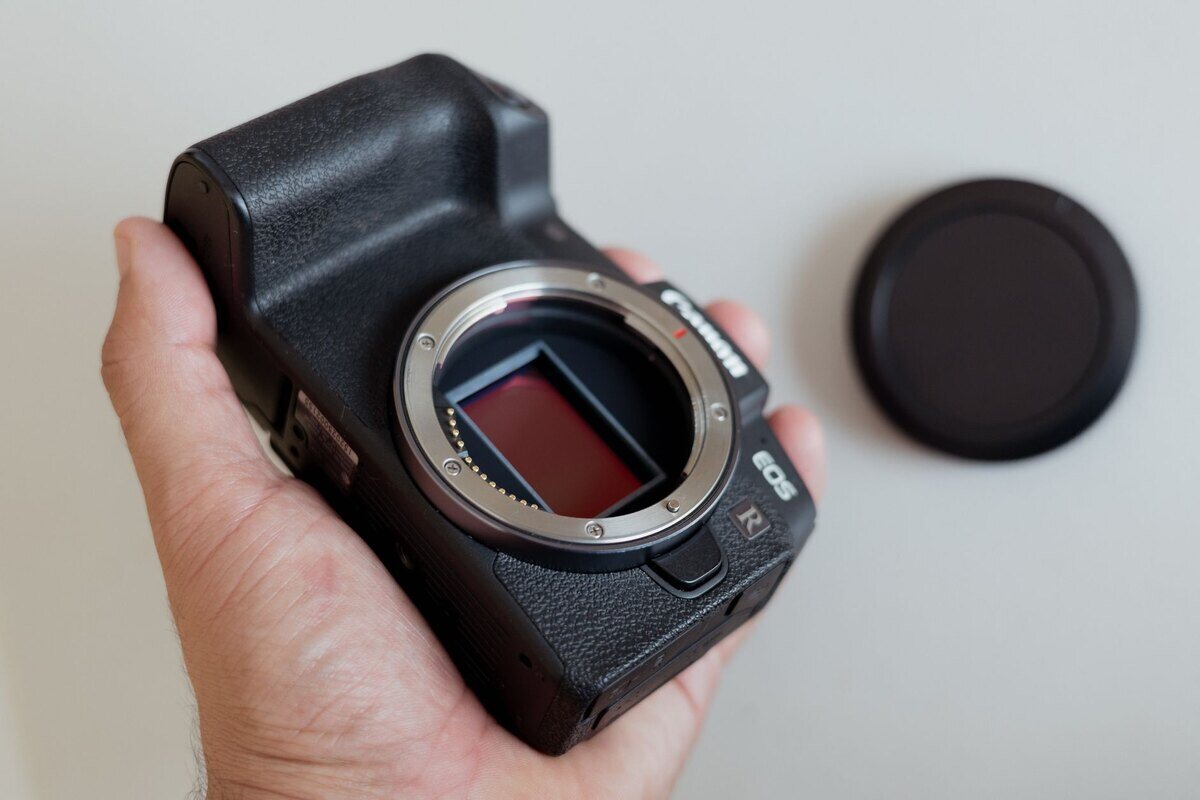
The sensor, uncovered. Photo: Josué Rodríguez / Pexels
Ask the three questions of the listing itself. A shop that grades in writing is answerable for the grade; a shop that says only “excellent condition” is answerable for nothing.
The cheapest body is the one you can send back.
Where to buy, and what the seller has to guarantee
Three kinds of seller, each with terms you can hold them to.
01
A shop that grades condition in writing
Used bodies and lenses, graded cosmetically
A shutter count published where one applies, fungus named with its severity, and no stock images: each item is photographed individually with its own SKU (MPB help centre, read 11 November 2026).
Best for a body you cannot hold first. The grade is a written claim rather than an adjective, so a body that arrives rougher than its description is a conversation with evidence in it.
02
A shop that warrants the used gear
A used department with its own policy, not a clearance shelf
The warranty covers operational faults in normal use and excludes drops, spills, sand and tampering, with repair, exchange or refund at B&H’s discretion (B&H used-item policy, read 11 November 2026).
A used purchase can be returned within 30 days of the purchase date once an RMA is issued. B&H reserves the right to refuse the return, or to charge a 15% restocking fee, if the item comes back in a different condition.
Best for a lens that has to earn money this month. The window is long enough to find the decentring you missed in the first week.
03
A marketplace where the terms are in the listing
Discontinued bodies, film cameras, adapters, odd accessories
eBay asks every listing to state the return criteria, the period, who pays return shipping and how a refund is issued (eBay, read 11 November 2026).
eBay also protects a seller on orders of $750 or more only when the parcel carries signature confirmation, with shipping and tax counted in that total.
Best for film gear, where the supply is private sellers rather than shops. Read the return line before the description, because on a marketplace the return policy is the warranty.
How to spend less, and when to stop
Three decisions that save the most.
04
Rent the lens before you buy it
A rental on your own body
Rental houses such as Lensrentals inspect every rental, and publish teardowns and field notes from the technicians who do the inspecting (Lensrentals blog, read 11 November 2026).
Best for a focal length you have never owned. A rental answers the only question that matters: whether you reach for it a second time.
05
Buy into the mount that still gets lenses
Choose the system, not the body
Camera makers shipped 6,609,813 interchangeable-lens cameras in 2024, and 5,612,205 of them were mirrorless, 85% of that category. Shipments of single-lens reflex cameras fell 14.4% over the same year, to 997,608 units (CIPA, 27 February 2025).
Best for a first serious camera. The mount decides what you can rent and resell in five years, and the numbers say which kind of body the makers are still building.
06
Upgrade on a failure, not on a date
One body, one reason to replace it
MPB compares a shutter count to mileage on a car, and notes that makers rate shutters from around 50,000 to over 300,000 actuations depending on the model; the count is published where one applies (MPB help centre, read 11 November 2026).
Best for anyone who upgrades every year. Nothing in that range is a calendar. A body leaves when a job fails because of it, and the shutter count is how you see that coming.
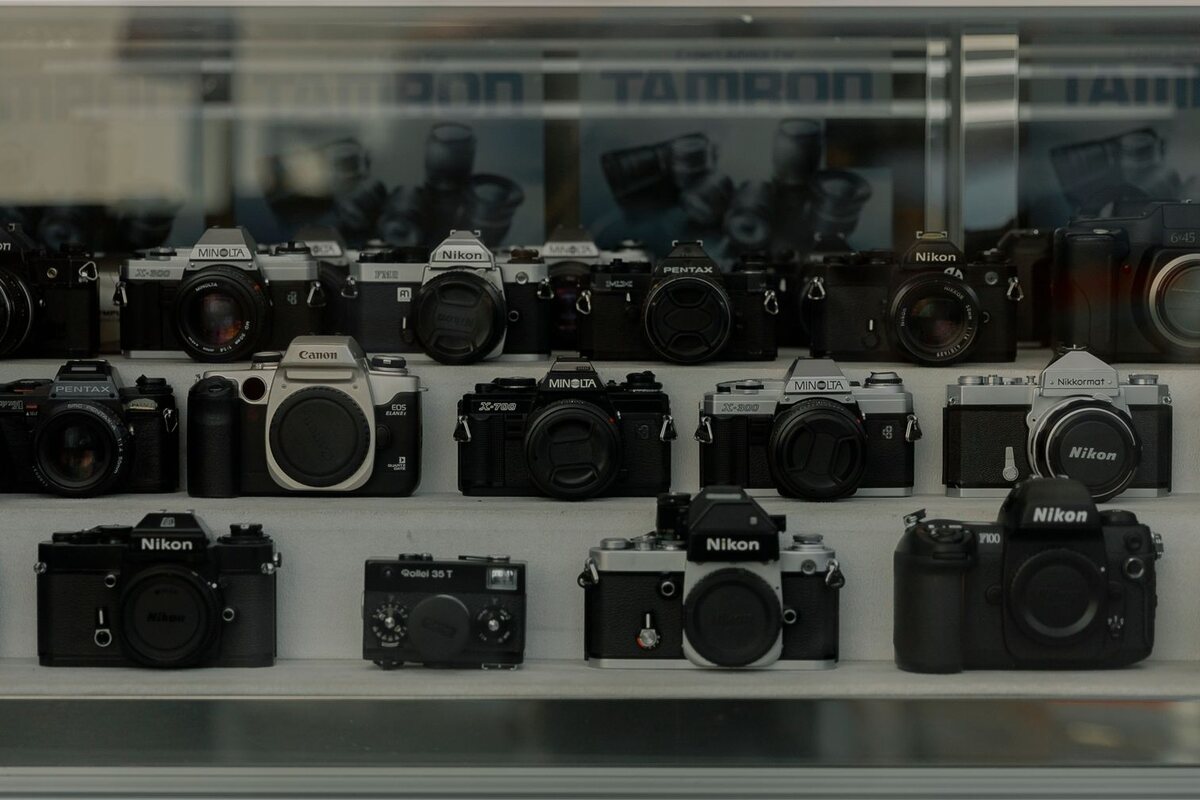
Film bodies behind glass, the sort a marketplace seller lists. Photo: Elina Volkova / Pexels
Five rules before you check out
Together they catch most of the mistakes.
Ask for the shutter count in writing before you pay, and keep the reply.
Check what the grade covers. On most sites it is the body, not the accessories.
Read the return window and count backwards from the shoot that needs the gear.
Price the lens you will want next, as well as the body in front of you.
Keep the box and the invoice. Both are what a resale price is built on.
This is not an argument for buying new. New gear is right when a body has to survive a season of paid work from its first week. Used gear is right when the money is better spent on glass. Shipping, sales tax and return postage are part of the price, and a body that goes back crosses the country twice.
The body you own is good enough for most of the work it is asked to do. The money saved by not replacing it early buys a lens you will still be using when the body is gone.