The question arrived twice this month, both times at the end of a call: can the photos be made to look better with AI? The answer is a line, and the line is worth writing down before anyone books.
Why the question is fair
A generative tool can add a guest who left early, replace a grey sky with a sunset, and reshape a face into a version of itself that never stood in the room. It is cheap, convincing, and already inside the editing software many photographers use every day.
That makes it a question worth asking any studio, not a sign of distrust. The photograph is the record, and a record that can be edited into a different evening is no longer a record.
Most people who ask are not asking for the editing to stop. They are asking where the line is, because they have seen a joined-up set of frames and guessed that something had been added. Usually something had, and usually it was a sky.
The frame is fixedWhat was in the room stays as it was, including the fire door and the uncle in the corner.
The grade is mineColour, contrast and crop are craft decisions, made frame by frame, not generated.
The edit is loggedEvery adjustment is a decision I can explain, not a prompt I cannot reproduce.
A record that can be edited into a different evening is no longer a record.
Five lines I do not cross
These are the places where a generative tool would help the picture and hurt the thing the picture is for. Each one comes with what I do instead.
01
No invented people
People · any frame with a gap
No added guests · no completed group · no face from another frame
Ask for: the photograph as it happened, or the frame from ten seconds later when the missing person was still there.
A group can be rebuilt from four frames and look convincing. It will also be the only picture from the day where nobody was standing next to anybody.
02
No weather that never happened
Place · outdoors, overcast
No replaced sky · no added sun flare · no snow, no blossom, no season shift
Ask for: the sky the day gave you, graded to hold its detail. A grey sky is honest and often better than a fake sunset.
03
No rebuilt faces
Retouching · every portrait
Blemishes and stray hairs yes · a different jawline no · a slimmer body no
Ask for: a retoucher who removes what was temporary and leaves what is you. If the finished face would not be recognised at the school gate, it is a different person.
A spot, a strand of hair across an eye, a shirt collar sitting wrong: all fair. A face narrowed by ten per cent is a portrait of somebody who was not at the wedding, and everyone will feel it without knowing why.
04
No generated "coverage"
The set · when something is missing
No synthesised frames to fill a gap · no AI album spreads · a missing frame stays missing
Ask for: an honest gap and a second angle. If the cake cutting was not photographed, say so, and we will look at what else the day gave.
05
Where the tools do help
The edit · behind the photographs
Culling and keywording · noise reduction · straightening · nothing that changes what happened
Best for: the boring hours. A tool that sorts four thousand frames into an order is a gift. A tool that decides what your evening looked like is not.
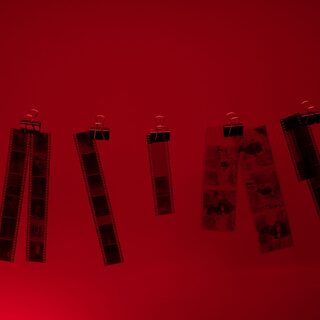
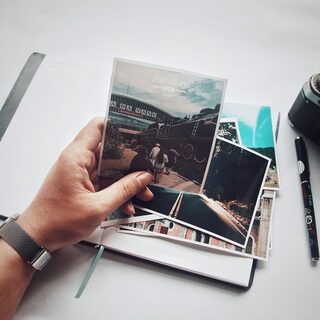
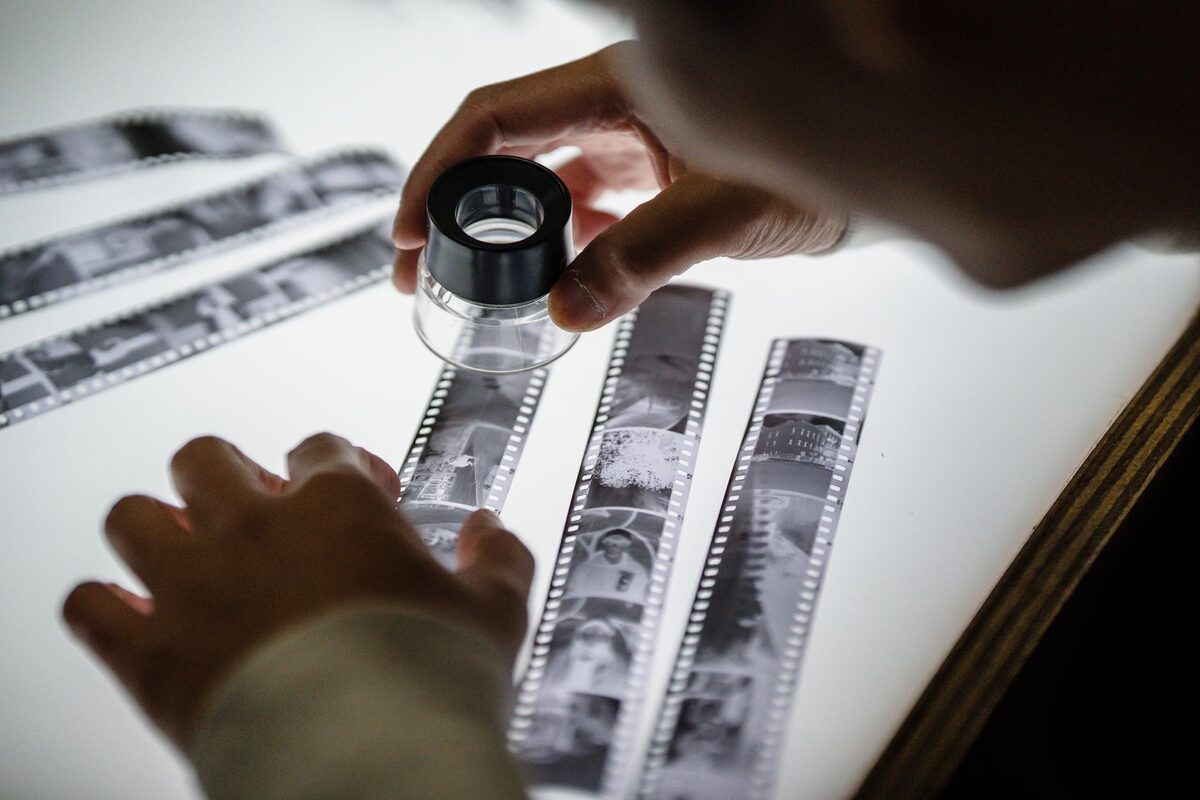
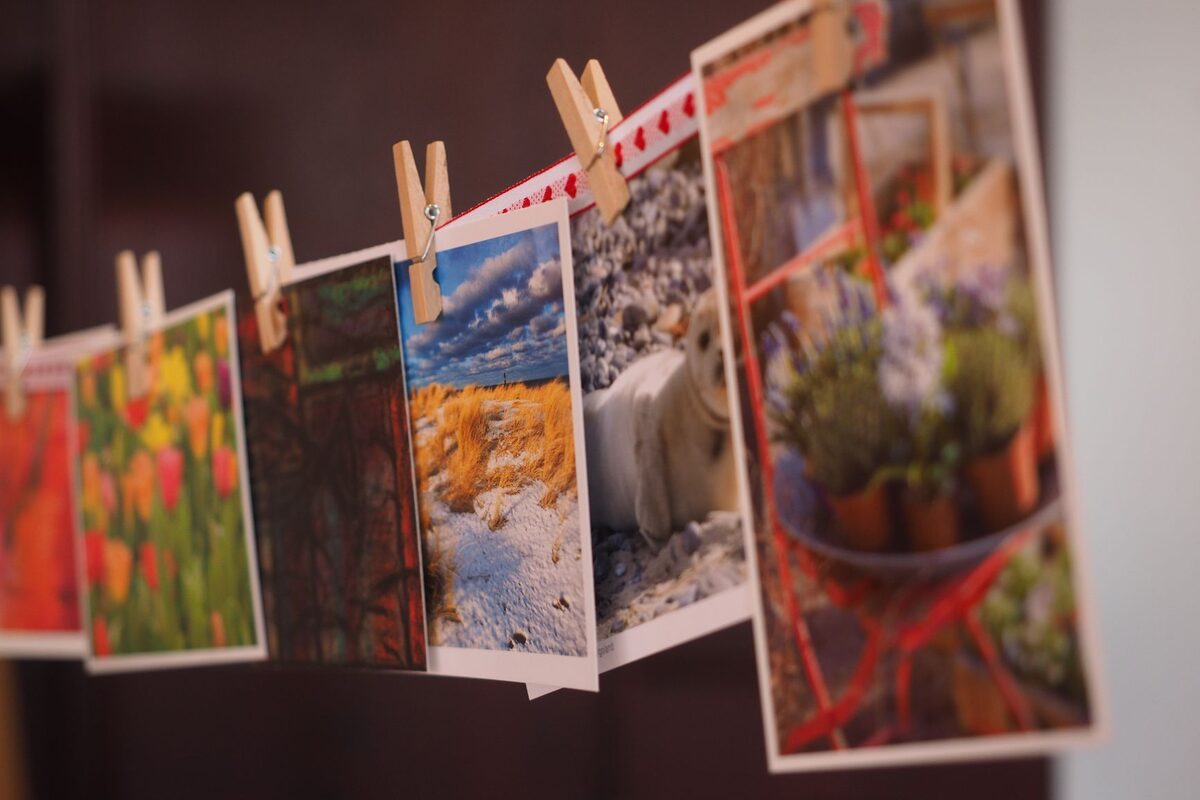
The whole roll, including the frames nobody would choose. Photo: Annushka Ahuja / PexelsPrints on a line at a wedding, chosen by the couple, fixed in place. Photo: Pixabay / Pexels
What to put in the contract
Ask for it in the booking email rather than the meeting, because the booking email becomes the file that both sides search in nine months. One sentence covers it, and any studio can agree to it: "No generative fill, no synthetic people, no replaced skies. Retouching is limited to blemishes, dust and exposure." Put it beside the delivery date, where it is read at the same time.
Ask what software the edit runs through, and whether the studio owns that decision. Some tools bundle a generative fill behind a button labelled "remove", and the person pressing it may not know what it does. Ask if a finished frame has ever been through a generative tool, and listen for a straight answer. A studio that says "only for noise and culling" is telling you its line.
The same sentence should cover film. A generated voice, a stitched reaction shot or a sky dropped into a clip is the same act with a different file extension, and it is harder to spot because it moves.
If the answer is vague, that is the answer. A studio that has thought about this will have a sentence ready, because the question arrives most weeks now.
The investment page sets out what a commission includes. What it does not include is a different evening, invented for the album.