
The sangeet runs late: a timeline
The questions below arrive in almost every South Asian wedding enquiry, usually in one email with the venue address attached. They are the five I answer first, because the answers move the rest of the weekend.
Why the timeline is the first decision
A sangeet has more moving parts than a ceremony: performances that involve people who are not performers, food that has to land while the room is still standing, and a dance floor that only opens once the older guests have eaten. Get the order right and the evening carries itself.
None of these answers is a rule. They are what works in rooms across Austin and Central Texas, and how I plan a shoot around them. The families who arrive with a plan they are willing to change have the best evenings.
Five questions, answered
Start the guest arrival an hour before you want the room full, and put the first performance ninety minutes after the doors. A sangeet rarely starts on time, and the guests who arrive early are the ones who will be in every photograph of the empty hall.
If the venue has a hard close, work backwards from it rather than forwards from dinner. The last hour is the one people remember, and it is the first one lost when the evening slips.
I use that first hour for the room itself: the stage before it is used, the table settings, the family arriving in ones and twos. By the time the performances start, the hall is too busy to photograph as a place.
Do not cut them, place them. Two speeches before the performances and the rest after dinner, with someone holding a list and a visible clock. The speeches that run long are usually the ones with no order and no one to stop them.
Give each speaker a time and a warning, and ask the host to be the person who enforces it. A photographer asking a cousin to wrap up is a photograph of a bad evening.
One microphone, one list, one person holding both. When the mic is passed hand to hand without a list, the order of speakers is decided by whoever is closest to it.
Before dinner, while everyone is still in the room and still dressed. Performances after dinner compete with the bar and the dance floor, and half the family is in the corridor on a call.
Five performances is a show. Ten is a rehearsal. If the family has more, group them: cousins together, aunts together, one item from each side, and a finale everyone joins.
Send the performance order the week before and check the audio on the day. Most of the disappointment in a sangeet film is a backing track that started late, not a dance that went wrong.
When the older guests have left before the food arrives, it is too late. In most rooms that line sits about three hours after the doors, and a buffet adds another forty minutes once the queue starts.
If the schedule is tight, serve the first course before the performances and hold the main for after. Nobody dances on an empty stomach, and nobody stays for a meal that lands at eleven.
Seat the elders where the food reaches them first and put the children near the door. Both decisions save twenty minutes, and both are made by the host, not the caterer.
The order, not the clock. I need to know what happens after what, who is on stage and when the room changes purpose. Exact times move; the order rarely does.
Send it a week out, then tell me the three changes that always happen on the day. The families who send one page and one phone number get the most complete set, because nobody is looking for anyone when the light is right.
A single page is enough: the order, the names of the people who must be in the family group, and who has the authority to move the schedule. Everything else can be decided in the room.
What I protect in every sangeet
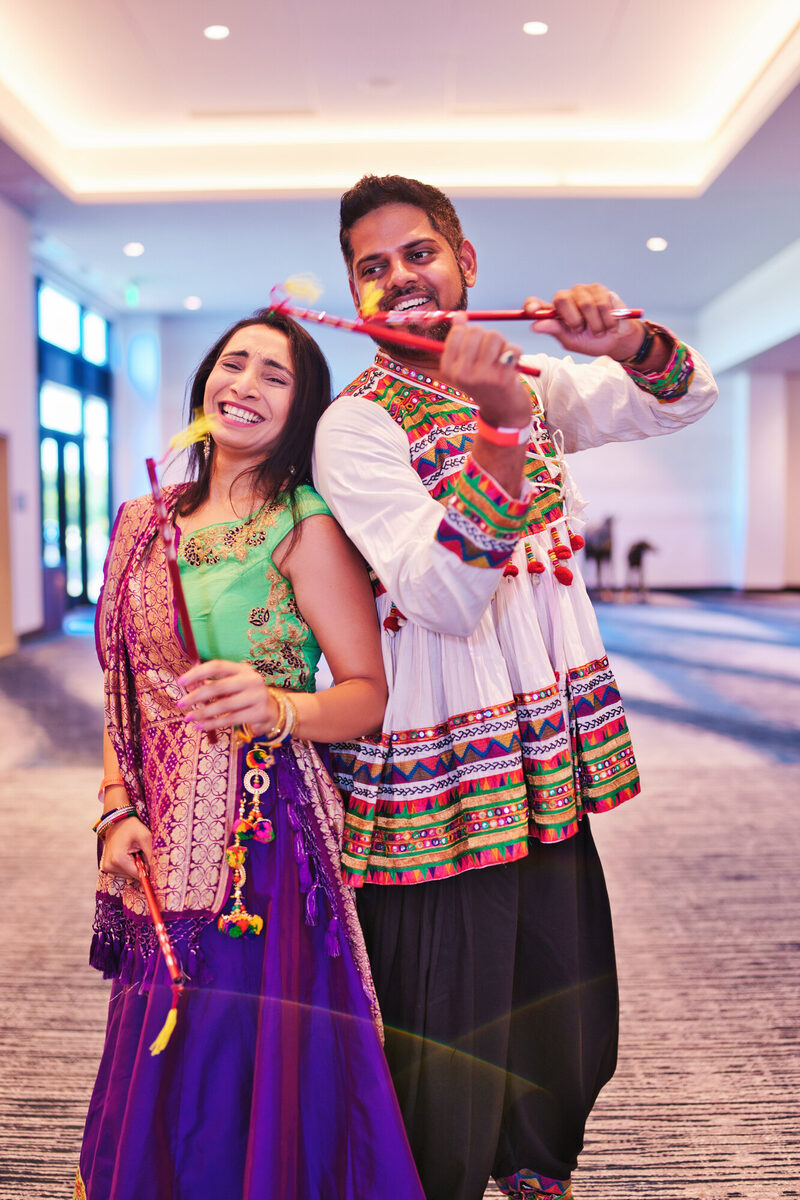
Two windows. The first twenty minutes after the doors, when everyone is dressed and nothing has been spilled. And the twenty minutes right after the performances, when the room is still together and the adrenaline has not yet turned into a queue at the bar.
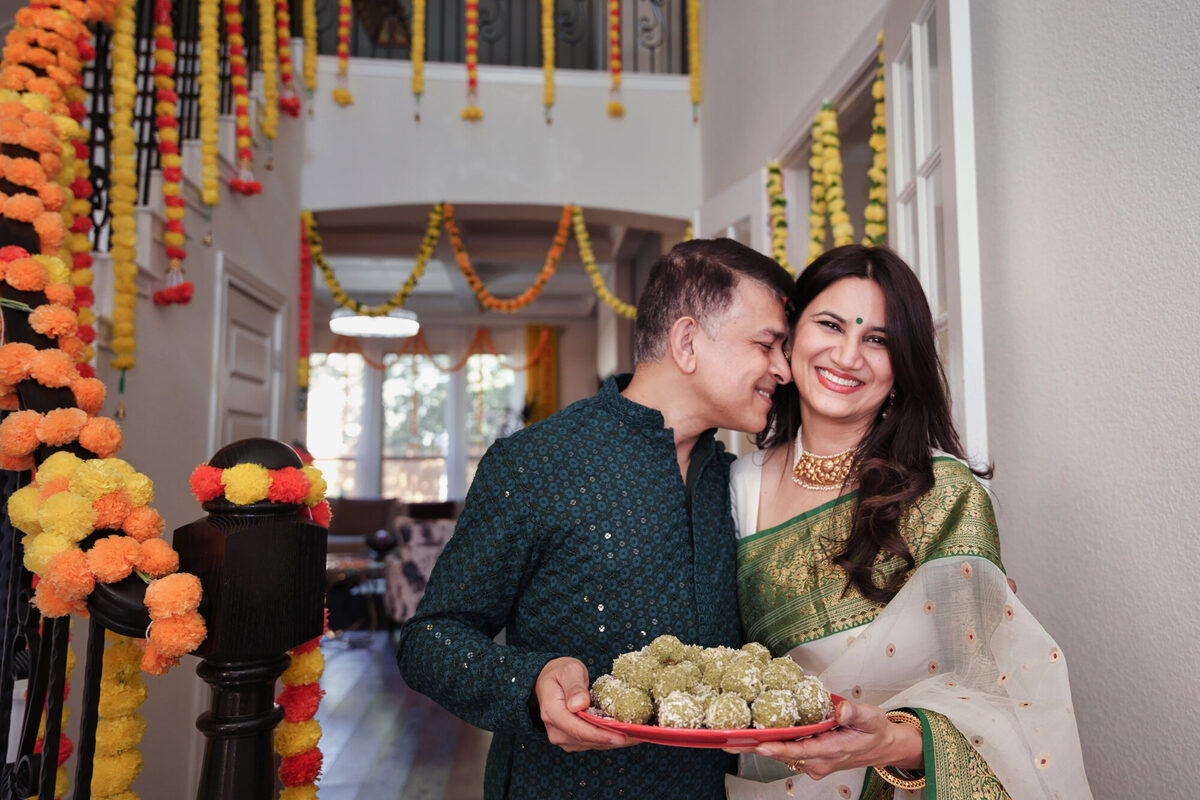
Both are group photographs that nobody has planned and everybody is in. They are the frames families print, and they cost nothing but a host who knows they are happening.
If the weekend runs to three events, the sangeet is also the one people arrive at relaxed. There is no vow to make and no ritual to get right, which is why the photographs from that night tend to be the ones where the family looks like itself.
For the ceremony that follows, the booking questions and the price ladder cover the rest. The investment page sets out multi-day coverage.